Silicon Quantum Computing Wins $20M to Build Quantum Chips for AI Acceleration
Australian startup manufactures quantum processors using silicon with atomic precision, targeting AI workloads that classical GPUs struggle with.
Silicon Quantum Computing (SQC), the Australian startup founded by physicist Michelle Simmons, secured $20 million from the National Reconstruction Fund to manufacture quantum chips domestically and deploy them for AI acceleration.
This is not a research project. SQC already has a product - the Watermelon machine-learning processor - in the market accelerating AI model training. The funding will scale manufacturing and hiring.
Why silicon quantum chips matter
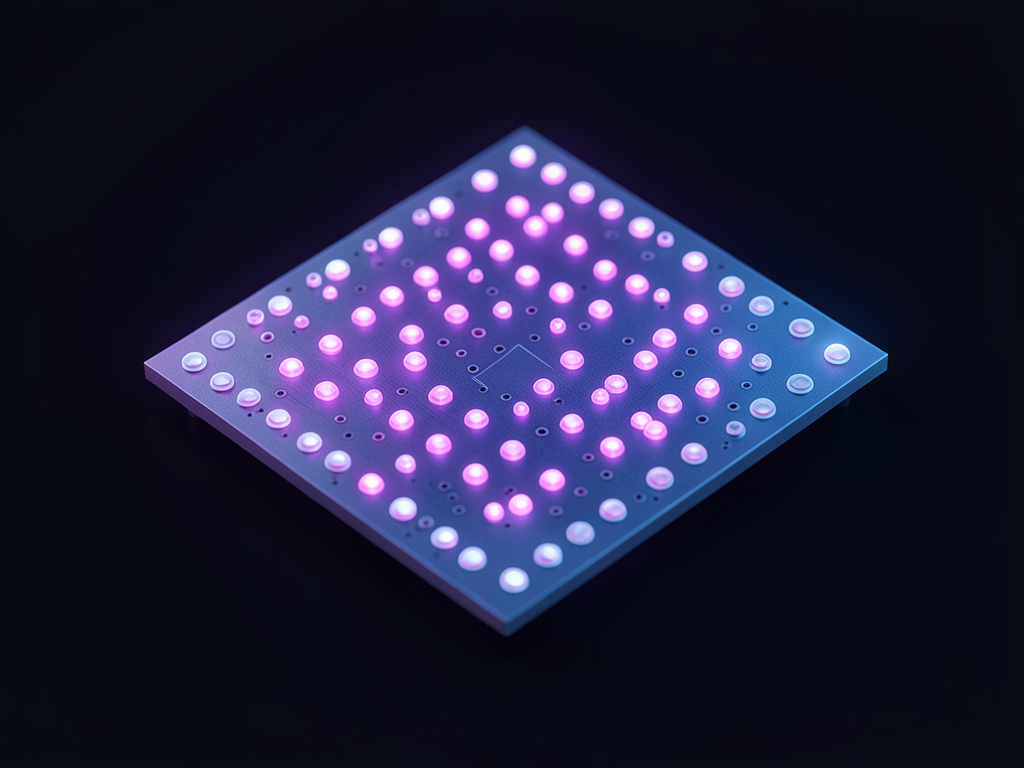
Most quantum computers use superconducting circuits or trapped ions. SQC manufactures quantum processors in silicon using atomic-scale precision engineering.
What makes this different:
- Silicon substrate - Built on the same material as classical chips, using familiar semiconductor manufacturing techniques
- Atomic precision - Individual phosphorus atoms placed in silicon act as qubits
- Lower power consumption - Quantum chips handle certain calculations using less energy than classical GPUs
- Hybrid architecture - Works alongside AI data centers, not as a replacement
The approach leverages decades of silicon manufacturing expertise. If it scales, it could make quantum computing more accessible than exotic materials requiring custom fabrication.
The AI acceleration use case
SQC positions its quantum processors as specialized accelerators for AI workloads, similar to how GPUs accelerate neural network training.
The opportunity: Certain computational tasks in AI - optimization problems, complex simulations, specific matrix operations - remain bottlenecks even with thousands of GPUs. Quantum processors excel at these exact problems.
Michelle Simmons explained: “One of the key challenges is AI is quite power-hungry and the whole premise of quantum chips is they can do calculations in a different way which uses less energy. For certain types of calculation, you can take the problem and offload it to a quantum chip rather than force AI to do the same task.”
The hybrid model:
- AI data center runs standard training workloads on GPUs
- Optimization-heavy tasks offload to quantum co-processor
- Results return to classical system for integration
- Net result: Faster training, lower energy costs
This is not quantum replacing AI. It’s quantum augmenting AI for specific computational bottlenecks.
What manufacturing locally enables
The $20 million investment specifically targets domestic manufacturing capacity in Australia.
Why this matters:
- Supply chain control - Not dependent on overseas fab capacity
- Rapid iteration - Manufacturing and R&D in the same facility accelerates development
- Economic multiplier - Creates jobs across the stack: quantum physicists, electricians, welders, fabrication technicians
- Technology sovereignty - Critical quantum tech developed and manufactured nationally
SQC is one of the few quantum companies that manufactures its own hardware rather than outsourcing fabrication. This vertical integration gives them tighter feedback loops between design and production.
Projected impact by 2045:
- $6.1 billion contribution to Australian economy
- 19,400 jobs directly in quantum sector
- 35,000+ supporting roles
The broader quantum-classical hybrid trend
SQC’s approach - quantum processors as specialized co-processors for classical systems - aligns with a broader industry shift.
Other recent examples:
QIAPO Project (Germany): BMW and Infineon are funding quantum-classical hybrid optimization for manufacturing and logistics. Neutral atom quantum computers simplify complex problems, then classical algorithms solve them efficiently. Even 5-10% accuracy improvements at industrial scale save millions in resources.
NVIDIA CUDA-Q integrations: Multiple quantum companies (IQM, Pasqal, Alice & Bob) now integrate with NVIDIA’s GPU acceleration platform, enabling seamless quantum-classical workflows. Alice & Bob achieved 9.25× speedup in quantum error correction decoding using NVIDIA Grace Hopper processors.
The pattern: Quantum processors as accelerators, not standalone systems.
What’s still uncertain
Honest limitations:
- Scale unknown - SQC hasn’t disclosed how many qubits their current systems have or error rates achieved
- Benchmarking needed - No public data comparing Watermelon processor performance to classical baselines on specific AI tasks
- Manufacturing challenges - Atomic-scale fabrication is difficult to scale; unclear how quickly capacity can grow
- Energy claims unverified - “Uses less energy” is qualitative; need quantitative comparison vs GPU equivalents
- Commercial traction - Customer list and revenue not disclosed; early-stage product
Key questions to track:
- Can SQC scale to 50+ qubits while maintaining coherence?
- What specific AI tasks show measurable quantum advantage?
- How does cost-per-inference compare to classical alternatives?
- What error rates are they achieving with silicon qubits?
What this means for enterprises
If you’re a CTO or technical executive:
Don’t rush to buy quantum hardware. But do track this space.
Why SQC’s approach matters for your roadmap:
- Near-term relevance - Targets problems (AI optimization) you’re solving today, not theoretical future use cases
- Hybrid architecture - Integrates with existing infrastructure rather than requiring greenfield deployment
- Energy efficiency - If claims hold, reduces operational costs for compute-intensive workloads
- Manufacturing scale - Silicon-based approach could hit commercial volumes faster than exotic platforms
Practical next steps:
- Identify bottlenecks - Map which AI/ML workloads hit optimization limits with current hardware
- Build literacy - Ensure technical teams understand quantum basics and hybrid architectures
- Track benchmarks - Watch for SQC’s published performance data vs classical baselines
- Evaluate pilots - When vendors claim quantum advantage for your use case, demand proof-of-concept data
- Timeline planning - Budget 2-4 years before commercial quantum-AI hybrids become production-ready
Red flags to watch:
- Vendors claiming “quantum advantage” without classical baseline comparisons
- Marketing hype without technical specifications (qubit count, error rates, coherence time)
- Promises of immediate ROI on quantum hardware purchases
- “Black box” systems without transparent benchmarking methodology
Sources & Further Reading
Primary sources:
- SQC announcement coverage (AAP via Queanbeyan Age) - National Reconstruction Fund investment details
- Australia’s National Quantum Strategy - Government economic projections
Related developments:
- QIAPO quantum-classical optimization project (The Quantum Insider) - BMW and Infineon industrial applications
- Alice & Bob GPU-accelerated QEC (Company blog) - 9.25× decoding speedup with NVIDIA platforms
Context:
- Silicon Quantum Computing founded 2017 as UNSW spin-out
- Michelle Simmons: 2018 Australian of the Year, pioneered silicon quantum dot research
- Watermelon ML processor: First commercial product, launched 2025