Quantinuum's H2 upgrade makes Japan's quantum-HPC stack more serious
RIKEN's upgrade from Quantinuum H1 to the 56-qubit H2 strengthens one of the most credible hybrid quantum-HPC deployments in production research today.
Read article →51 articles covering quantum fundamentals, algorithms, hardware, error correction, and industry developments. Updated daily with honest technical analysis.
RIKEN's upgrade from Quantinuum H1 to the 56-qubit H2 strengthens one of the most credible hybrid quantum-HPC deployments in production research today.
Read article →
IQM's 20-qubit Radiance sale to TOYO marks Japan's first enterprise-purchased quantum computer and signals a shift toward on-prem quantum plus HPC workflows.
Read article →

IonQ's trapped-ion architecture and Pasqal's HPC integration push show quantum progress shifting from headline qubit counts to buildable systems and workflows.
Read article →

TreQ's eight-configuration quantum testbed suggests buyers may soon compare processors, controls, and calibration layers separately.
Read article →

Quantum computing's center of gravity kept moving up the stack this week: from hybrid workflows and chemistry pilots to networking, modular infrastructure, and the first signs that error correction is becoming an engineering race rather than a physics argument.
Read article →

Cisco's new quantum switch preserved entanglement with at most 4% fidelity loss, a useful sign that interoperability may matter as much as qubit count.
Read article →After decades of theory, quantum error correction started working in practice between late 2024 and early 2026. Here's what actually happened, who did it, and what it means for the timeline.
Read article →

IonQ and Q-CTRL turned quantum optimization into a managed cloud workflow on 36-qubit Forte systems, a more useful 2026 signal than another qubit claim.
Read article →
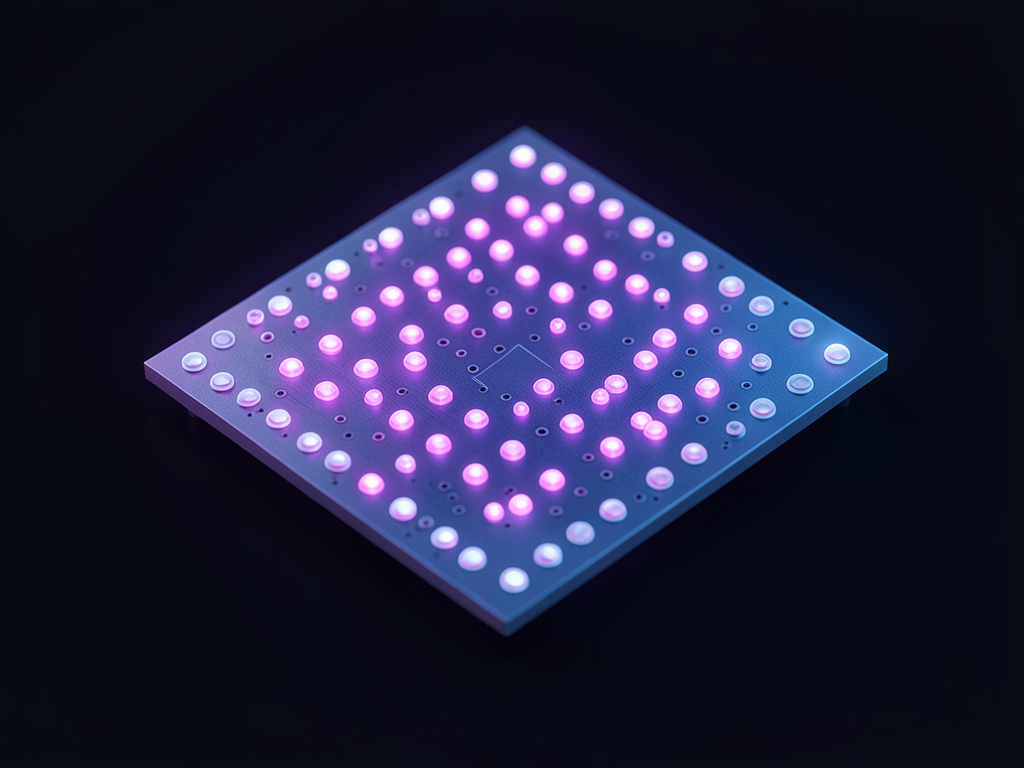
A new neutral-atom architecture paper cuts fault-tolerant runtime by up to 3x at the same qubit cost, while QMatter raises $1.2M to shrink chemistry workloads before they hit hardware.
Read article →

DARPA gave Infleqtion $2 million for heterogeneous quantum software, while OrangeQS extended its seed round to €15 million for automated chip testing.
Read article →

Equal1 and Kvantify are pairing silicon quantum hardware with chemistry software, a more credible 2026 quantum story than another qubit headline.
Read article →

IBM's healthcare workflow win, a new enterprise challenge cycle, US policy shifts, and a louder push toward logical qubits show quantum's center of gravity moving from hardware theater to workflow validation.
Read article →

IBM tied a 100-qubit healthcare result to a new quantum-HPC integration push, showing where near-term quantum computing may create value first.
Read article →

Cryptographic risk from quantum attacks tightens as Google and Caltech push qubit efficiency and error-correction research shows near-term utility; planning steps for executives remain urgent.
Read article →

Caltech spinout Oratomic claims tens of thousands of qubits could break encryption, while Google's 10x more efficient Shor implementation compounds the urgency. University of Sydney publishes low-overhead error correction reducing qubit overhead for fault-tolerant computing.
Read article →
IBM and ETH Zurich announce a 10-year collaboration to build foundational algorithms bridging classical computing, AI, and quantum systems. Google signals a dual-modality hardware strategy adding neutral atoms alongside superconducting qubits.
Read article →

Google warns quantum computers could break Bitcoin's encryption sooner than expected, setting a 2029 migration deadline. Fujitsu and Osaka University demonstrate practical quantum chemistry on early fault-tolerant hardware.
Read article →
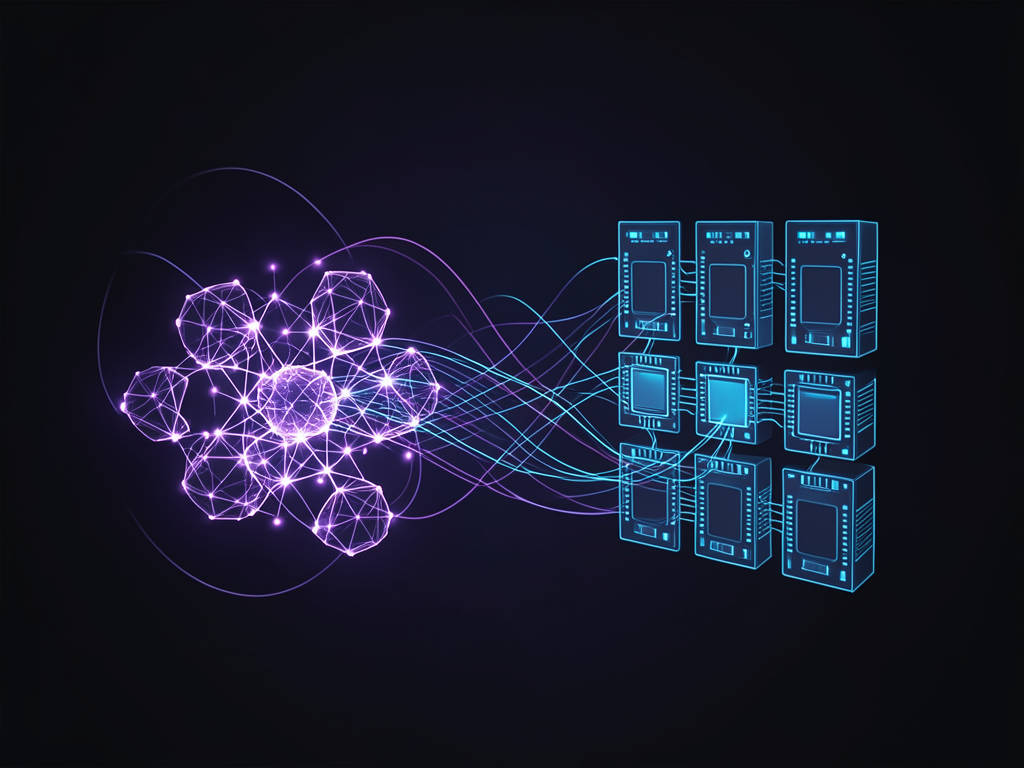
Google opens early access to its Willow processor while Caltech research suggests useful quantum computation could be achieved with around 10,000 qubits. Replication studies urge rigorous validation.
Read article →
Google bumps up Q-day estimate to 2029 - five years earlier than expected. Why this matters for banks, governments, and anyone storing encrypted data.
Read article →
The week quantum computing got real: IBM validates against experimental data, Google accelerates Q-day to 2029, and governments shift from funding research to buying hardware.
Read article →
A 50-qubit quantum processor reproduced neutron scattering measurements of a magnetic material, proving current noisy machines can contribute to practical science.
Read article →
New molecular optimization technique reduces catalyst simulation time from thousands of years to 35 days, while IBM validates quantum results against real experimental data for first time.
Read article →
Britain launches world's first government quantum procurement program, shifting from research grants to actually purchasing hardware at scale.
Read article →
Researchers demonstrate nearly 1:1 encoding efficiency with logical qubits that outperform physical qubits, marking a critical milestone toward practical fault-tolerant quantum computing.
Read article →
Australian startup manufactures quantum processors using silicon with atomic precision, targeting AI workloads that classical GPUs struggle with.
Read article →A short story about quantum computing, helium, and the things we can't observe without changing.
Read article →
New algorithm enables drug design problems 10x larger than previous quantum demonstrations, using physics of magnets to coordinate small quantum processors.
Read article →
Wellcome Leap's Q4Bio competition puts NISQ-era quantum to the test with cancer drug simulation, genomics, and diagnostic challenges. Winners announced April 2026.
Read article →
The quantum field shifts from 'someday' to 'this year'—infrastructure matures, governments procure hardware, and NISQ systems prove clinical value. Plus: first public photonic quantum company.
Read article →
Wellcome Leap's Q4Bio competition shows hybrid quantum-classical systems tackling cancer diagnostics and drug discovery on today's NISQ hardware.
Read article →
Xanadu's new quantum algorithm simulates battery degradation processes beyond classical methods, requiring fewer than 500 logical qubits for early fault-tolerant systems.
Read article →
IBM publicly commits to demonstrating quantum advantage in 2026, while three companies integrate NVIDIA CUDA-Q for hybrid quantum-classical computing. Technical details and business implications.
Read article →
Britain's government will purchase large-scale quantum computers from domestic companies over four years, backing hardware development with sovereign capability goals.
Read article →
Nothing physical is transported. No faster-than-light communication. Quantum teleportation transfers information using entanglement — and it's essential for quantum networks.
Read article →
IBM's quantum-centric supercomputing reference architecture shows how to embed QPUs into existing data centers without disruptive infrastructure changes.
Read article →
'We have 1,000 qubits' means nothing without context. Here's a framework for evaluating quantum hardware claims — the numbers that matter, the ones that don't, and the red flags.
Read article →
17 developments this month signal a real shift: fault-tolerant logical qubits, 100km quantum networks, and GPU integration. The 'horsepower era' is ending. Here's what's replacing it.
Read article →
Quantum Computing Inc. and Ciena integrate quantum key distribution, quantum identity authentication, and post-quantum cryptography in a commercial telecom platform capable of 1.6 terabit/second encrypted data transmission.
Read article →
Superconducting, trapped ion, photonic, neutral atom, topological — five fundamentally different bets on the future of computing. Here's what each one does and why the race is still open.
Read article →
Error correction is the biggest engineering challenge in quantum computing. The surface code is the leading solution — here's how it works, without the stabilizer math.
Read article →
A practical reading workflow for non-physicists: what to look for, what to skip, and where papers hide their real assumptions.
Read article →
Quantum computation isn't 'run once, get answer.' It's 'run thousands of times, average the results, hope the noise doesn't drown the signal.' Here's the cost model.
Read article →
Every month, someone claims quantum advantage. Here's a framework for evaluating those claims — fairly but sceptically.
Read article →
The hype says yes. The truth is more nuanced. Here's what quantum computers can and can't do today, who's using them, and when they'll actually matter.
Read article →
You write a quantum program as gates on qubits. The hardware runs microwave pulses and laser beams. The gap between these two is called compilation — and it determines whether your algorithm actually works.
Read article →
Quantum computers aren't better classical computers. They're a completely different tool for completely different problems. Here's what they're actually good at.
Read article →
Qubits are absurdly fragile. A stray photon, a vibration, even cosmic rays can ruin a computation. Error correction is the single biggest challenge in quantum computing.
Read article →
Quantum entanglement isn't mystical or faster than light. It's a specific kind of correlation that classical physics can't explain — and it's a tool, not magic.
Read article →
Forget 'trying all possibilities.' Quantum computing works because wrong answers can cancel themselves out. Here's how.
Read article →
The most misunderstood concept in computing, explained without the mysticism. A qubit is weirder than '0 and 1 simultaneously' — and more useful.
Read article →
The most common misconception about quantum computing is that it's just a speed boost. It's not. It's a fundamentally different way of computing — and for most things, it's actually slower.
Read article →